CLINICAL PROCEDURES
& Possible Risks and Consequences
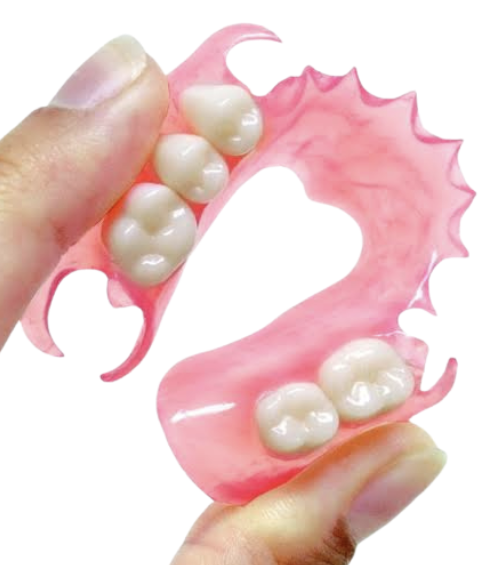
The Process – How We Create Your Flexible Dentures
Our step-by-step approach ensures you get the best-fitting flexible dentures in Reservoir and Keysborough.
Wearing a Partial Denture
In most cases, removable partial dentures provide a cost-effective and successful solution for replacing missing teeth. However, as with any removable prosthesis, their long-term success depends largely on how well you care for your remaining natural teeth, maintain healthy gums, and properly clean and look after your denture. Good oral hygiene and regular professional reviews are essential to achieving the best possible outcome.
Common risks and consequences
- Oral Health and Hygiene
Maintaining good oral hygiene is essential. Always remove your denture when cleaning your natural teeth and ensure food debris does not accumulate around clasps or supporting teeth. Where possible, rinse and clean your denture after meals and remove it while sleeping to help maintain healthy teeth and gums. - Initial Soreness
Some discomfort, pressure areas or minor ulcers may occur while your mouth adjusts to the new denture. This is a normal part of the settling process. If soreness persists, please return for adjustments and fine tuning to improve comfort. - Speech Changes
Your speech may be affected temporarily as your tongue and lips adapt to the new denture. With regular use and practice, normal speech usually returns quickly. - Eating and Chewing
Eating with a new denture requires an adjustment period. Factors such as stability, retention and initial tenderness may affect chewing efficiency. Most patients find that comfort and function improve with time and practice. - Taste and Surface Feel
Dentures may temporarily alter the taste or texture of certain foods. Proper cleaning is important to prevent bacterial build-up, which can affect taste and oral health. If any rough or unusual areas are noticed, please contact your Dental Practitioner. - Staining and Plaque Build-Up
Plaque and staining can be minimised with regular cleaning and by following the instructions provided by your Dental Practitioner. Reducing the intake of coffee, tea, tobacco and strongly coloured foods may also help maintain the appearance of your denture. - Food Trapping and Odour
Food particles may occasionally become trapped beneath the denture or around clasps during eating. This is common and can be managed by removing and cleaning the denture regularly. Good denture hygiene will also help prevent unpleasant odours. - Breakage and Damage
Although denture materials are durable, no denture is unbreakable. Hard foods, accidental drops or trauma to the mouth may result in fractures, chipped teeth or damaged clasps. Care should always be taken when handling your denture. - Relines and Replacement
The shape of your gums and supporting bone naturally changes over time, particularly following tooth extractions. As a result, dentures may require periodic relining, adjustment or replacement to maintain comfort, fit and function.
Why Choose Our Services?